 Reviews



A clogged sink drain is properly fixed when the material causing the restriction is removed instead of temporarily pushed aside. Basic DIY clearing can cost $0 to $50 in 2026, while professional drain cleaning costs $147 to $352 and averages about $246. The supplied keyword clogged sink drain has clear repair intent. This guide focuses on a drain that stays slow after an initial attempt or becomes clogged again soon after it appears to be fixed.
Why Does a Sink Drain Stay Clogged?
A sink stays clogged when part of the obstruction remains inside the stopper area, P-trap or branch pipe. A small opening can let water pass temporarily while hair or grease remains attached to the drain wall and catches new material.
The cause often depends on the sink:
- Bathroom sinks commonly hold hair around the stopper.
- Kitchen sinks often develop grease and food buildup.
- Either type can collect material inside the P-trap.
- A deeper obstruction can sit in the wall-side drain.
A temporary drop in water level does not prove the full drain opening has been restored.
How Can You Tell Where the Clog Is Located?
The sink's behavior can help locate the restriction before you take anything apart. Visible hair points toward the stopper. A clean stopper with slow drainage shifts attention toward the P-trap. A clean trap with continued backup points farther into the branch pipe.
| Symptom | Likely Location | Next Check | 2026 Cost Exposure |
|---|---|---|---|
| Visible material | Drain opening | Manual removal | Usually DIY |
| Plunging helps briefly | Trap area | Inspect P-trap | $0 to $50 DIY |
| P-trap is clear | Branch drain | Hand auger | $147 to $352 |
| Several drains slow | Shared piping | Wider diagnosis | Can cost more |
Current 2026 guidance estimates many DIY sink unclogging jobs at 30 to 45 minutes with $0 to $50 in supplies.
What Signs Mean the Clog Was Not Fully Fixed?
A repaired sink should drain at its normal speed during sustained use. If water begins pooling again within hours or days, part of the blockage remains or new material is collecting on residue that was never fully removed.
Watch for these signs:
- The sink becomes slow again the same day.
- Water drains only after the faucet is turned off.
- Gurgling continues after the first repair.
- An unpleasant drain smell returns.
- A second sink bowl fills during drainage.
- Plunging works for only a short period.
- The P-trap repeatedly collects the same type of debris.
- A full basin drains much slower than a small faucet stream.
- A nearby fixture starts draining slowly.
- Standing water returns despite surface cleaning.
A recurring problem deserves deeper inspection rather than another identical surface treatment.
How Do You Fix a Clog Near the Drain Opening?
A shallow clog should be physically removed before the drain is plunged or snaked. Bathroom hair and kitchen food residue can sit directly beneath the stopper or strainer. Pulling that material outward prevents it from being pushed deeper into the piping.
For a bathroom sink:
- Remove the pop-up stopper.
- Pull hair from the stopper stem.
- Use a flexible plastic drain strip.
- Clean residue from the upper drain.
For a kitchen sink:
- Remove the strainer.
- Discard trapped food.
- Wipe accessible grease.
- Check the disposal when one is installed.
Test drainage before moving to the P-trap.
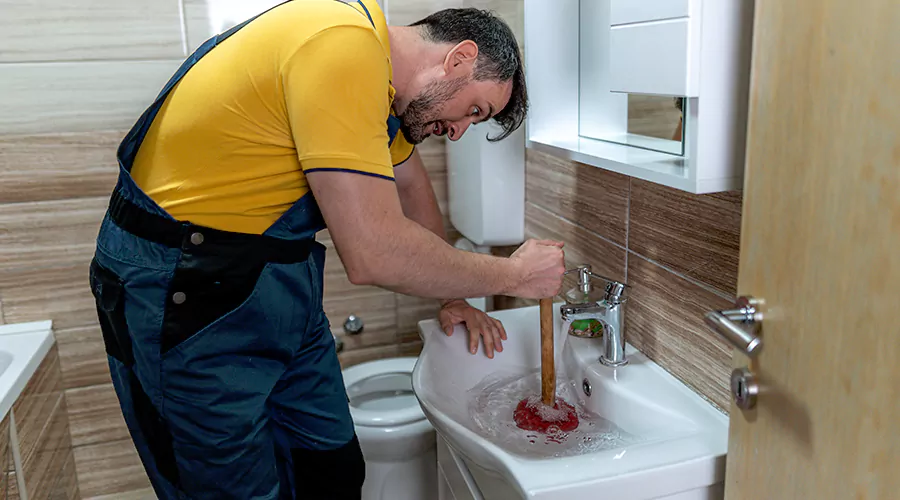
How Do You Fix the Clog With a Plunger?
Plunging works best on a soft obstruction near the fixture. The cup needs a complete seal around the drain. Bathroom overflow openings and unused bowls on a double kitchen sink should be sealed so pressure reaches the blockage rather than escaping elsewhere.
Use this process:
- Remove excessive standing water.
- Leave enough water to cover the plunger edge.
- Seal other drain openings.
- Center the plunger.
- Push and pull in controlled strokes.
- Maintain the seal for about 20 to 30 seconds.
- Remove the plunger and observe the drain.
If drainage improves but remains slow, another part of the clog may still be present.
How Do You Fix a Clog in the P-Trap?
The P-trap should be inspected when the drain opening is clear but water still moves slowly. This curved section can hold hair or solid debris. Removing it also tells you whether the blockage is inside the trap or farther into the wall-side drain.
Place a bucket below the trap before opening it.
Then:
- Loosen the slip nuts.
- Support the trap while lowering it.
- Empty the standing water.
- Remove all visible debris.
- Clean the inside surface.
- Check each washer.
- Reinstall the trap.
- Test every connection for leaks.
A completely clean P-trap gives you useful diagnostic information. The obstruction is farther downstream if the sink remains clogged.
How Do You Fix a Deeper Sink Drain Clog?
A manual drain snake is the next step when the P-trap is clean. The cable can enter the pipe leading into the wall and reach material beyond normal hand access. Advance the cable gradually while rotating it instead of forcing it forward.
Remove the P-trap first for direct access.
Then:
- Feed the cable into the wall pipe.
- Advance in short sections.
- Rotate when resistance develops.
- Pull back slightly if the cable stops.
- Advance again with light pressure.
- Retract the cable slowly.
- Remove captured debris.
- Repeat when drainage is improving.
The related supplied keyword blocked sink drain fits this more severe condition. Stop when the cable repeatedly reaches the same hard resistance without progress.
Should You Use Baking Soda and Vinegar?
Baking soda and vinegar are more suitable for light residue than a severe sink blockage. Current 2026 guidance puts the material cost below $5. A dense hair or grease clog should still be removed mechanically because the physical obstruction remains inside the pipe.
Never combine the mixture with commercial drain chemicals.
If you use it:
- Remove visible debris first.
- Treat only a drain that still moves some water.
- Allow the reaction to finish.
- Rinse afterward.
- Stop if the sink remains restricted.
The method is better suited to minor buildup than a sink full of standing water.
How Do You Test a Sink After Repair?
A successful repair should let the sink handle a partly filled basin without backing up. A small faucet stream is not enough to confirm success because a partial obstruction can pass low flow while failing when a larger amount of water reaches it.
Test the repair this way:
- Reassemble the drain.
- Run water at a low rate.
- Inspect beneath the sink for leaks.
- Close the stopper.
- Fill the basin halfway.
- Release the stopper.
- Watch the drainage speed.
- Inspect the plumbing again.
Fast drainage with dry connections is the target result.
When Should You Call a Professional?
Professional drain cleaning is reasonable when a hand auger cannot restore normal drainage or the clog repeatedly returns. Professional drain cleaning costs $147 to $352 in 2026. General drain snaking and clog clearing can range from $95 to $500 depending on scope.
Professional diagnosis is useful when:
- The blockage lies beyond the reach of a hand auger.
- Multiple fixtures drain slowly.
- Wastewater returns through another fixture.
- The clog comes back within days.
- Accessible piping is damaged.
- The sink begins leaking during backup.
A professional can distinguish a fixture clog from a larger branch-line problem.
How Can You Stop the Clog From Returning?
Preventing another clog means controlling what enters the sink and removing early buildup before it reaches the P-trap. Kitchen and bathroom sinks need different habits because the material entering each drain is different.
For bathroom sinks:
- Remove hair from the stopper regularly.
- Wipe grooming residue from the basin.
- Clean the upper drain when flow begins slowing.
For kitchen sinks:
- Keep grease out of the drain.
- Use a strainer for food residue.
- Avoid rinsing coffee grounds into the sink.
For every sink:
- Watch drainage speed.
- Respond to gurgling early.
- Clean accessible buildup before standing water develops.
Conclusion
To fix a clogged sink drain, locate the remaining obstruction rather than repeating the same temporary treatment. Clean the stopper or strainer first. Plunge the sink before opening the P-trap. Use a hand auger when the trap is already clear. If the sink blocks again or several fixtures develop drainage problems, professional diagnosis may be appropriate. Test the repair with a partly filled basin before considering the job complete.
Frequently Asked Questions
Why is my sink still clogged after plunging?
The obstruction may sit inside the P-trap or farther into the branch drain.
Can a P-trap cause a complete blockage?
Yes. Hair or solid debris can collect inside the curved section until very little water can pass.
Why does my sink drain normally for a day and clog again?
A narrow path may have opened through the obstruction while most of the material remained in the pipe.
Can a drain snake damage sink plumbing?
Excessive force can damage some plumbing. Advance a hand auger gradually and stop at rigid resistance.
Should I keep using drain cleaner if the first dose fails?
No. Repeated chemical use can create a hazard and may not remove the physical cause of the blockage.